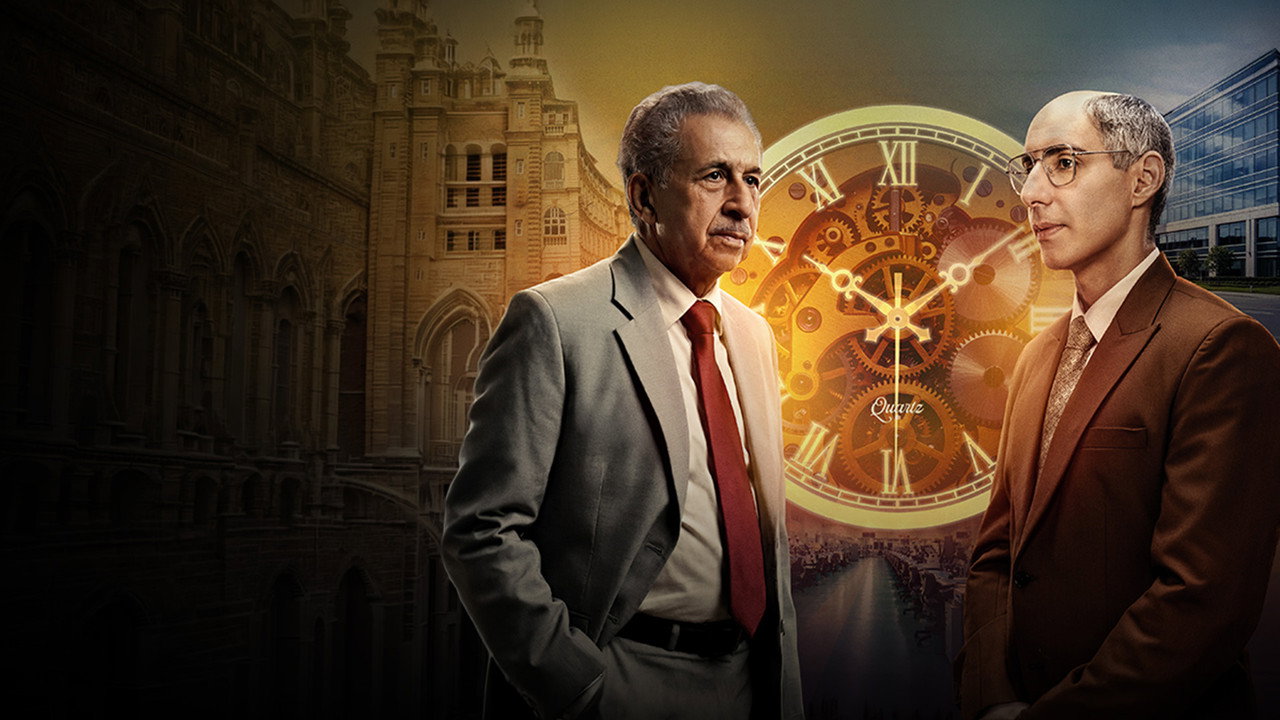
Made in India: A Titan Story — Season 1
Made in India: A Titan Story is the rare Indian biopic-series that mostly resists the temptation to varnish — a six-episode breeze of nostalgia about the people who decided, in a country that didn’t yet quite believe in itself, to build a watch.
Adapted from Vinay Kamath’s Titan: Inside India’s Most Successful Consumer Brand, Robbie Grewal’s series sits squarely in the 1970s and early 1980s, that long pre-liberalization decade when starting a consumer business in India meant negotiating a small empire of licenses, foreign-exchange quotas, and polite official skepticism. Jim Sarbh’s Xerxes Desai is the show’s restless engine, and Naseeruddin Shah plays J.R.D. Tata as exactly the kind of patriarch you’d want behind a long-shot idea: sparing with his words, generous with his belief. The series is at its best when it treats the dream of a homegrown watchmaker not as inevitable destiny but as a stubborn act of faith.
If Made in India feels familiar to anyone, it’s because Sarbh has been here before. In Rocket Boys, he played Homi Bhabha as a man trying to will an Indian scientific establishment into existence, and the through-line is unmistakable: the same coiled intensity, the same conviction that institutions are simply ideas held tightly enough for long enough. Where Rocket Boys leaned operatic — atomic-age stakes, sweeping score — Made in India is gentler, more workaday. It cares about a Bombay HMT shop window, a Swiss factory tour, the texture of a quartz movement in a young engineer’s palm. Both shows share a tone of secular reverence for the act of building; this one just keeps its volume lower.
The craft is where the series quietly wins you over. The cinematography has a soft, sepia-touched warmth that earns its period without slipping into postcard prettiness — interiors are dim and lived-in, exteriors hum with the slightly tired pastels of a Coromandel coastal town. Between scenes, brief snatches of seventies Hindi film songs do half the emotional work: a few bars of a familiar refrain are enough to compress an entire decade of mood. It’s the kind of soundtracking that trusts the audience to remember on its own. Vaibhav Tatwawadi and Namita Dubey, in particular, get to inhabit the engineer’s-life subplots with a lovely small-room intimacy.
What works
- Sarbh and Shah’s restraint. Neither plays for the cheap seats; both let the period do the heavy lifting.
- The 1970s atmosphere. Light, sound, frame, costume — it all conspires to feel inhabited rather than reconstructed.
- The song interludes. Two or three bars of vintage Hindi cinema as a scene transition is a small genius move.
- A sympathetic portrait of mid-century Indian entrepreneurship. The grit isn’t flattened into mythology; the licenses, the snubs, the failures are all in frame.
Where it stumbles
The show’s biggest article of faith is also its most contestable: that Titan eventually became a world-class watchmaker. It didn’t, really. Titan grew into a very good Indian mass-market brand — accessible, well-designed, dependable — and there’s a perfectly worthwhile story in that. The series occasionally drifts from “we built something improbable here” toward “we built something the Swiss should fear”, and the prose of the show doesn’t quite earn the second claim. It’s the one place where Made in India lets affection blur into mythology. Even so, it’s genuinely interesting to learn how much of that overreach was the founders’ actual ambition rather than later marketing — the dream itself is part of the historical record.
The Verdict
A simple, sincere, atmospheric series about the audacity of building something from nothing in a country that hadn’t yet decided what it was. It won’t blow you away, and you’ll probably argue with one or two of its claims, but you’ll finish it warmer than you started — which, for six episodes on a Sunday, is more than fair. Recommended for anyone who loves a competent period piece, a Sarbh performance, or the particular Indian romance of the seventies.
Rating: 3.5/5
Discussion · 0 replies
No replies yet. Be the first to share your take — hit Reply at the top of the review.