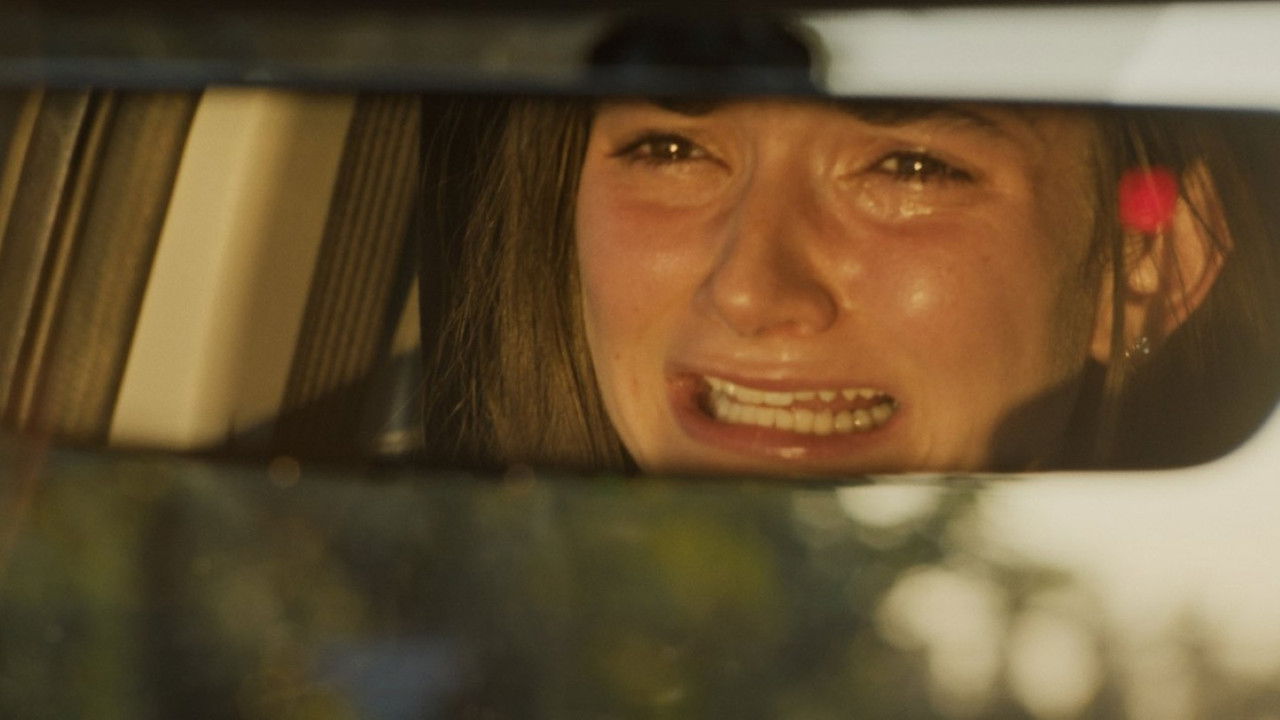
Ugly Cry
Emily Robinson’s Ugly Cry shines as an unsettling meditation on identity and aspiration, capturing the absurd lengths we’ll go to for validation, albeit within a somewhat uneven narrative. The film oscillates between horror, comedy, and thriller, creating a genuinely disorienting vibe that reflects the protagonist’s disintegrating psyche. Robinson’s performance, particularly as Delaney, is mesmerizing; she’s a chaotic blend of desperation and ambition, capable of making both laughter and tears resonate.
The film’s premise cleverly interrogates the concept of the “ugly cry” — a vulnerability we often hide for fear of judgment. Delaney’s obsessive pursuit of a polished facade commands attention, while the haunting presence of her younger self serves as a stark reminder of who she once was. The cinematography drifts between soft, intimate close-ups during her auditions and stark, disorienting shots that mimic her unraveling grip on reality. The score, uneasy and minimalist, lurches through shifts in tone, amplifying the dissonance between Delaney’s aspirations and her mental state.
However, Ugly Cry doesn’t always maintain its balance. As it ventures deeper into the realm of horror, some comedic beats feel forced or mishandled, weakening key transitions. Despite its weaknesses, the film exhibits an intriguing commentary on the pressures of self-image in the age of social media, where the desire for recognition often blurs the line between performance and authenticity.
What works
- Emily Robinson’s performance: She deftly conveys the spectrum of Delaney’s madness and ambition.
- Cinematography: Intimate close-ups contrast with more jarring visual moments, mirroring the protagonist’s internal conflict.
- Sound design: The unsettling score heightens emotional stakes, drawing viewers into Delaney’s spiral.
- Theme exploration: The anxiety of societal approval serves as a relatable backdrop to Delaney’s struggle.
- Comedy and horror blend: Moments of humor cleverly punctuate the escalating tension, though inconsistently.
In comparing Ugly Cry to Person of Interest, both projects hint at Robinson’s knack for creating unsettling emotional landscapes, yet Ugly Cry goes further, tapping directly into the psyche of a person grappling with self-perception. Where Person of Interest focused on external threats posed by technology, Ugly Cry pivots inward, exploring the uniquely human fears of inadequacy and transformation.
The Verdict
Ugly Cry invites audiences into a surreal exploration of self that, despite its shaky narrative, serves as a cautionary tale about the price of perfectionism and the haunting specters of our past. Though it might struggle with tonal consistency, its emotional core resonates, making it a hauntingly relatable experience for many.
Discussion · 0 replies
No replies yet. Be the first to share your take — hit Reply at the top of the review.